

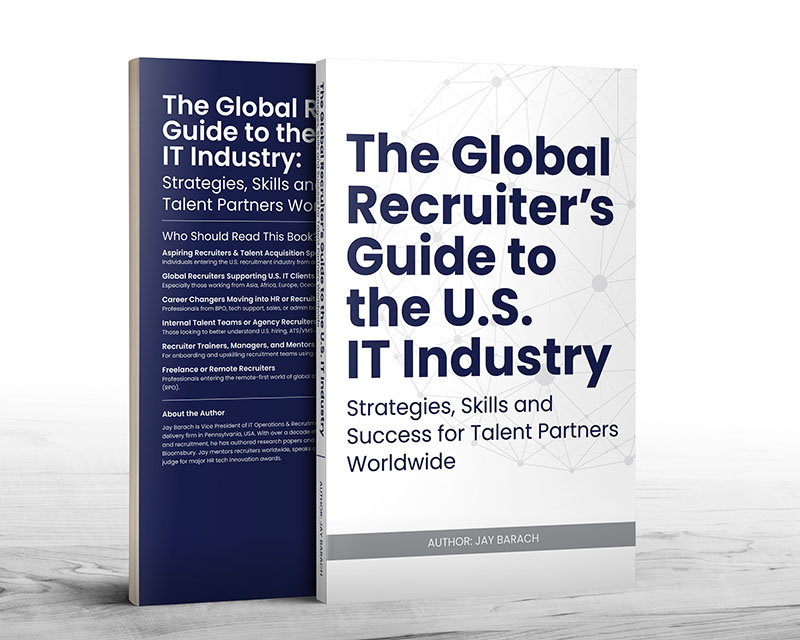
Book
The Global Recruiter’s Guide to the U.S. IT Industry: Strategies, Skills, and Success for Talent Partners Worldwide
Published internationally, this book serves as a practical guide for aspiring recruiters and talent acquisition specialists serving the U.S. IT market.
Type:
Research Paper (Journal)
Publication:
IEEE
Abstract:
With the increasing sensitivity surrounding employee performance data, there is a pressing need for predictive systems that preserve privacy while delivering actionable insights to organizations. This paper introduces HFAN-Priv, a hierarchical federated attention network designed to predict employee resignation risk and evaluate performance trends without sharing raw data across organizations. The framework integrates feature-level and instance-level attention to model complex workforce patterns, applies differential privacy through gradient masking to ensure compliance with data protection regulations, and enhances interpretability using local SHAP and LIME explanations. Experiments conducted on a real-world employee productivity dataset show that HFAN-Priv achieves near-perfect predictive accuracy, robust cross-client generalization, and transparent decision-making, all while maintaining strong privacy guarantees. The proposed approach presents a scalable, ethical, and effective solution for HR analytics in decentralized environments.
Keywords:
Federated learning, Data models, Accuracy, Privacy, Companies, Machine learning, Training, Differential privacy, Predictive models, Surveys
Type:
Research Paper (Conference)
Publication:
IEEE
Abstract:
This paper presents an AI-driven framework for anomaly detection and predictive security modeling in multi-cloud environments, addressing the complexity of modern cloud infrastructures. It uses AWS CloudTrail logs to track user activities, API calls, and network events. By integrating machine learning models like Autoencoders and LSTM networks, it achieves a 96% detection accuracy with a 4% false positive rate, improving on existing methods. Key innovations include cross-cloud threat correlation, detecting coordinated attacks across providers like AWS, Azure, and Google Cloud, using a custom correlation function. The framework also excels in proactive threat detection, achieving 91% accuracy in forecasting security incidents, helping anticipate and mitigate risks. Real-Time data processing through Apache Kafka allows efficient log streaming, and GPU-accelerated training in Google Colab ensures effective operation in large environments. It boasts a Mean Time to Detect (MTTD) of 28 seconds and a Mean Time to Resolve (MTTR) of 18 minutes.
Keywords:
Anomaly detection, multi-cloud security, AI-driven threat detection, predictive analytics, cross-cloud correlation, CloudTrail logs
Type:
Research Paper (Conference)
Publication:
ACM
Abstract:
Software-defined networking (SDN) encounters security challenges akin to those found in conventional networks. The decoupling of the SDN control plane from the data plane introduces a heightened risk to the controller, rendering it susceptible to cyberattacks. Traditional security models, such as perimeter-based defenses, fail to mitigate lateral movement attacks, often exploited by malicious insiders or vulnerabilities in hardware and software. Zero Trust Architecture (ZTA) has emerged as a modern security paradigm designed to enhance enterprise network defenses. In this work, we present an advanced zero-trust security framework, ZSDN-Guard, tailored for SDN environments. The proposed framework leverages deep learning techniques and ZTA principles to safeguard all network assets and connections. ZSDN-Guard incorporates a traffic anomaly detection module, CALSeq2Seq1, which utilizes deep learning for real-time analysis of user network activities. This system continuously monitors and restricts unauthorized access to network resources, enabling dynamic, context-aware authorization. The MiniIZTA simulation platform, built upon Mininet, was developed to assess the efficacy of the proposed ZSDN-Guard framework. Experimental evaluations indicate that ZSDN-Guard maintains approximately 80.5% network throughput under attack conditions. Furthermore, the framework achieves an anomaly detection accuracy of 99.56% using the SDN dataset, validating its robustness and effectiveness in enhancing network security.
Keywords:
Zero Trust, SDN Security, Deep Learning, ZSDN-Guard, Anomaly Detection, Dynamic Authorization, Network Monitoring, Cybersecurity, Mininet Simulation, Real-Time Analysis
Type:
Research Paper (Conference)
Publication:
IEEE
Abstract:
This paper provides an in-depth analysis of optimizing resource allocation in multi-cloud environments through the integration of advanced machine learning and optimization techniques. We implemented a comprehensive strategy that combines CNN for predicting resource demands, Ant Colony Optimization (ACO) for optimizing initial resource allocation, PPO for dynamic adjustments, and GBM for forecasting energy consumption. The CNN model exhibited strong performance in demand prediction, with detailed metrics demonstrating its effectiveness across various scenarios. ACO significantly improved resource distribution efficiency, as evidenced by a reduction in active cloud regions. The system’s adaptive capabilities were further enhanced by Proximal Policy Optimization (PPO), which dynamically optimized resource allocation in response to real-time demand fluctuations. Additionally, the GBM model provided highly accurate energy consumption predictions, closely aligning with actual usage data and underscoring the potential for energy-efficient management in multi-cloud environments.
Keywords:
Multi-Cloud Computing, Resource Optimization, Advanced Machine Learning, Convolutional Neural Networks (CNN), Ant Colony Optimization (ACO), Proximal Policy Optimization (PPO), Gradient Boosting Machines (GBM), Energy Consumption Prediction, Efficient Resource Management, Cloud Infrastructure Optimization
Type:
Book Chapter
Publication:
Bloomsbury (The Resilient Age: Sustaining Performance in the Changing World)
Abstract:
When it comes to aiding businesses with demanding tasks regarding human resource management, Talent Optima unequivocally boasts of the best there is to offer. This tool utilizes AI based decision making, advanced predictive analytics, and also machine learning, all of which help in enabling automated resource allocation. To aid with better human resource management, TalentOptima integrates perfectly with already existing HR frameworks such as tools, etc. and shifts the focus towards aiding the user with insights while simultaneously alleviating manual work, this aids in a plethora of positive HR outcomes. A total of 40 managers participated in a simulation via user testing to ascertain if HR costs would reduce and work productivity would rise, the results were quite clear, attrition rates had dipped alongside risk and resource management rates, alentOptima was a clear winner. Whereas the other HR frameworks primarily focused on ensuring work was done, TalentOptima ensured optimal and innovative decision-making, which overtime has proven to be invaluable for multiple companies, these results aid in proving why the tool is revolutionary.
Keywords:
DSS, Software Project Management, Predictive Analytics, Performance Metrics, AI Integration, Project Efficiency Improvement, Resource Utilization, Risk Management, Client Satisfaction, Quality Improvement
Type:
Research Paper (Conference)
Publication:
ICRHRM
Abstract:
The following paper aims to discuss the multifaceted interaction of organizational culture and Diversity, Equity, and Inclusion (DEI). This paper investigates the impact of organizational culture on Diversity, Equity, and Inclusion (DEI) initiatives through a scoping review. Using the Arksey and O’Malley framework, enhanced by Levac et al., and adhering to the PRISMA-ScR checklist, this review systematically identifies, selects, and synthesizes literature from 2016 to 2023. A comprehensive search across PubMed, Scopus, Web of Science, Google Scholar, and AJOL yielded 169 articles. After removing duplicates, 152 articles were screened for relevance, and 105 were excluded based on title and abstract. Of the 47 full-text articles assessed, only 15 met the inclusion criteria, focusing on the intersection of organizational culture and DEI. Key findings highlight that leadership commitment and active employee engagement are essential for embedding DEI into organizational culture. Transparent and inclusive policies significantly influence workforce satisfaction and organizational performance. Cultural dimensions, such as power distance and collectivism versus individualism, shape the effectiveness of DEI strategies, while societal norms and regulatory frameworks critically affect their success. The review underscores the importance of aligning leadership practices and organizational culture with external influences to foster sustainable DEI outcomes. This study provides actionable recommendations for organizations, emphasizing the integration of leadership-driven DEI strategies, culturally sensitive practices, and compliance with societal and regulatory expectations. These insights aim to guide organizations in cultivating equitable, inclusive workplaces while enhancing performance and workforce satisfaction.
Keywords:
Diversity, Equity, Inclusion (DEI), Organizational Culture, Leadership Commitment, Employee Engagement, Workplace Policies
Type:
Research Paper (Conference)
Publication:
ICRHRM
Abstract:
This systematic literature review aimed to examine recruitment strategies for addressing skill gaps in the information technology (IT) sector. The review synthesized findings from 14 studies that explore various approaches to recruitment, including the use of technology, multidisciplinary programs, and strategic alignment between industry needs and educational outcomes. Key strategies identified include the integration of artificial intelligence (AI) in recruitment processes, adopting gamification to align educational choices with job market demands, and using person-brand fit to reduce social skills gaps. The review also highlights the growing importance of e-recruitment and social media as tools for attracting and screening candidates and the critical role of contextual factors such as technology competence and regulatory support in adopting AI. Additionally, the analysis underscores the persistent
challenges of recruiting candidates with the necessary hard and soft skills, particularly in rapidly evolving sectors like IT. The findings suggest that combining innovative technologies and targeted recruitment practices is essential for bridging skill gaps and meeting the dynamic demands of the IT workforce. This review provides valuable insights for researchers and practitioners seeking to enhance recruitment strategies in the face of ongoing technological advancements and labor market shifts.
Keywords:
Recruitment Strategies, Skill Gaps, IT Sector, Talent Acquisition, Digital Transformation, Gamification in recruitment
Type:
Book Chapter
Publication:
Springer (Advanced Network Technologies and Intelligent Computing – Part 4)
Abstract:
This paper addresses the challenge of defending neural networks against adversarial attacks and environmental noise by proposing a cross-modal architecture that combines image and audio data streams. With the MNIST and Audio MNIST datasets, the model integrates specialized Convolutional Recurrent Neural Network (CRNN) encoders for each modality, followed by a late fusion layer that synthesizes features into a unified, resilient representation. This fusion mechanism exploits the inherent consistency between modalities, reducing the impact of adversarial perturbations targeting a single data stream. Preprocessing steps, including normalization, Gaussian noise injection, and adversarial example generation through FGSM and PGD, are applied to simulate diverse attack scenarios. The adversarial training loop, designed to expose the model to clean and adversarial samples, further strengthens its robustness by minimizing the adversarial success rate (ASR) while preserving high accuracy. Evaluation metrics like F1-score, precision, recall, and accuracy confirm the effectiveness of this defense strategy. Our results highlight a marked improvement in performance over unimodal approaches, with a substantial reduction in ASR and enhanced resilience in noisy environments. By uniting cross-modal consistency checks and adversarial training, this approach offers a promising defense mechanism for real-world applications where security and reliability are paramount.
Keywords:
Adversarial Attacks, Cross-Modal Consistency, Neural Network Defense, Multimodal Fusion, Adversarial Training, Noise Robustness, Convolutional Recurrent Neural Networks (CRNN), Adversarial Success Rate (ASR)
Type:
Research Paper (Journal)
Publication:
ABS International Journal of Management
Abstract:
In the rapidly evolving landscape of cybersecurity, project management methodologies (PMMs) play a pivotal role in ensuring the success of cybersecurity initiatives. However, many organizations struggle with selecting the appropriate methodology, leading to project delays, budget overruns, and even failure. This paper investigates the causes and consequences of incorrect methodology selection in cybersecurity projects. Through an in-depth analysis of case studies, including real-world examples from sectors such as banking and healthcare, the paper highlights how inappropriate methodology choices, such as rigidly adhering to Waterfall or Agile, can result in ineffective security measures and project failure. Factors contributing to incorrect selection, including insufficient technical knowledge, unrealistic deadlines, budgetary constraints, and unclear project objectives, are explored. The paper further outlines recommendations for improving cybersecurity project outcomes by aligning project methodologies with organizational needs, focusing on stakeholder engagement, and incorporating continuous risk management practices. By offering guidelines on effective methodology selection, this research serves as a resource for project managers and cybersecurity professionals to navigate the complexities of cybersecurity project management and ensure better alignment between project goals and execution.
Keywords:
Cybersecurity project management, Methodology selection, Agile and Waterfall, Risk management, Project failure factors
Type:
Research Paper (Conference)
Publication:
IEEE
Abstract:
Intrusion detection systems (IDS) are essential in cybersecurity to protect networks from online threats. This research addresses the urgent need for compact, highly adaptable Network Intrusion Detection Systems (NIDS) capable of identifying anomalies. Utilizing the NSL-KDD dataset, which includes 43 variables with labels “attack” and “level,” the study proposes a novel approach combining channel attention and convolutional neural networks (CNN). This dataset facilitates a comprehensive assessment of the proposed intrusion detection strategy, aiming to maintain operational efficiency while enhancing detection accuracy. Typically, NIDS analyzes both risky and normal behaviors using various techniques. Our CNN-based approach, integrated with channel attention, achieves an impressive accuracy rate of 99.728% on the NSLKDD dataset. This solution significantly outperforms previous methods such as ensemble learning, CNN, RBM (Boltzmann machine), ANN, hybrid auto-encoders with CNN, MCNN, and adaptive algorithms, demonstrating a substantial improvement in intrusion detection performance. The results underscore the effectiveness of our method in enhancing intrusion detection precision, marking a significant advancement in the field. Future efforts will focus on strengthening and expanding this approach to counteract evolving cyber threats and adapt to changing network conditions.
Keywords:
Adaptation models, Accuracy, Attention mechanisms, Transfer learning, Telecommunication traffic, Traffic control, NSL-KDD, Convolutional neural networks, Ensemble learning, Resilience
Type:
Research Paper (Journal)
Publication:
Emerging Engineering and Mathematics
Abstract:
The use of AI and HR has therefore been adopted as a revolutionary way of addressing the instability in challenges facing engineering IT projects in Agile frameworks. In this paper, we will discuss how both AI and HR hold the opportunity to collaborate in closing crucial skills gaps which pertain to DEI efforts. As distinct from typical DEI views mainly based on race, gender or sexual orientation this approach rests on identification of DEI by bridging technical and operative skill deficit. New possibilities in the selection of the right manpower, optimal HR management measures, and prospective AI-assisted predictive models can reformulate the HR-management strategies matching the IT engineering project requirements. Readers will find in this article a framework for Agile success, as well as examples of best practices and success indicators involved in these integrated strategies. Insofar as this study is concerned, both theoretical and applied approaches provide the framework for offering a view on the contemporary processes of modernization of workforce management and improving project results in IT engineering. The research proves that AI and HR interfaces must work in harmony for the organization to realize enhanced innovation, performance, and healthy growth in the fields of engineering. It is, therefore, in light of this that this article should be beneficial to academics, industry practitioners, and policymakers with the goal of fostering the use of Agile project management and enhancing the effective utilization of human capital in technology-based projects.
Keywords:
AI and human resources management, Agile project management, Analysis of skill gaps, Information technology engineering strategies, Workforce optimization, AI in integration with HR, DEI policies, engineering team, AI in prediction of workforce, Talent Management through AI.